
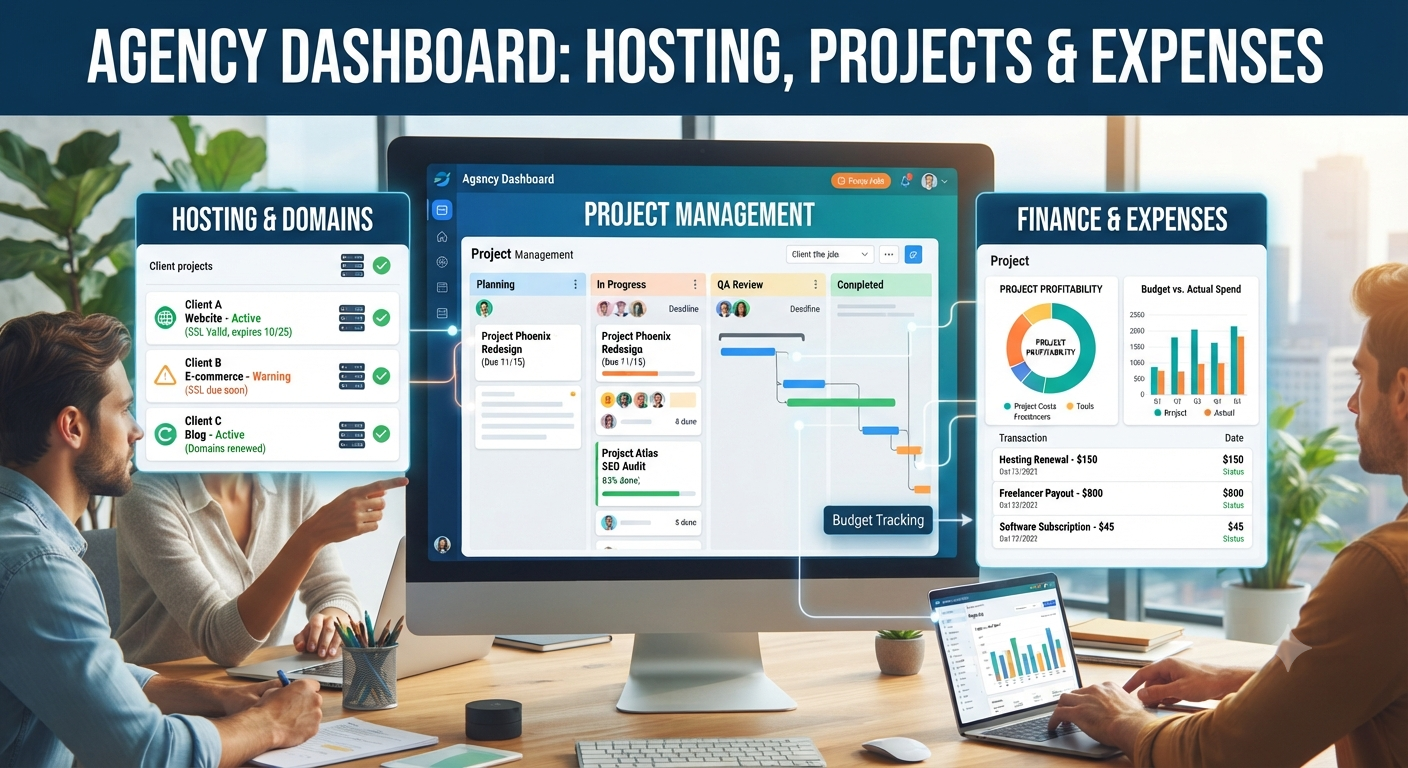
Agency Operations Guide: Managing Hosting, Projects & Expenses
If you run a digital agency, you know it's more than just client projects on your plate. There’s hosting accounts to watch, domain renewals to remember, freelancers to pay, endless software subscriptions, project expenses, and those everyday business bills that never stop rolling in.
It gets messy when all this info is scattered across Excel sheets, emails, WhatsApp messages, and random sticky notes. That’s how hosting renewals fall through the cracks, project expenses go unrecorded, and you’re left wondering what a project actually cost when it’s all said and done.
It's not about being buried in information. The real problem is keeping the right details connected.
Pull It All Together In One Place
Imagine having one system where hosting management, project tracking, and expense logging actually talk to each other. Suddenly, running your agency gets a whole lot smoother.
Don’t Lose Track of Hosting Details
If you manage a bunch of client sites, there’s a lot more to track than just who owns which domain. There’s the hosting provider, plan type, renewal dates, how much it’ll cost, billing cycles, SSL certificates, which client each account belongs to the works.
Storing everything in one spot means you always know what’s live, what’s due for renewal, and what needs your attention next. No more surprises.
Stay On Top of Renewals
Every agency dreads that phone call "My website’s down." More often than not, someone missed a hosting or domain renewal. That’s a headache you don’t need.
With all your renewals and costs in one central place, you see what’s coming up before it becomes a crisis. No more digging through old emails or spreadsheets to double-check.
See the Whole Client Picture
Hosting isn’t a standalone thing it’s tied to client relationships. So the flow usually looks like this:
Client → Website Project → Domain → Hosting → Renewal
Linking these details saves you from wasting time hunting across different apps. Anyone on your team can understand the full situation for any client, at a glance. This matters even more if your agency handles development, hosting, maintenance, and ongoing support.
Know What Each Project Actually Costs
It’s easy to see what a client paid. The real trick is knowing what it cost you to deliver.
Projects often involve:
- Paying freelancers or developers
- Design fees
- Hosting and domain charges
- Software or premium plugins
- Content creation
- Third-party services
- Any other client-specific expenses
Track all this against each project, not in a jumble. That way, comparing project income to real project costs is simple, not guesswork.
A project that bills at ₹1,00,000 might sound like a big win until you realize you spent ₹60,000 on everything from development to add-ons. Suddenly, your profit margin doesn’t look so hot.
This helps you make better quotes in the future, too.
Separate Client Expenses From Agency Costs
Don’t lump everything together. Your agency has its own operating expenses:
- Rent
- Internet
- Salaries
- Software subscriptions
- Marketing
- Equipment and admin
Keep these apart from project expenses. This way, you can always answer two key questions:
How much did this project cost?
And, what’s the actual cost to run the agency?
Having clear numbers makes decisions easier.
See Projects and Expenses Side by Side
Project management tells you who’s doing what and when it’s due. Expense management tells you what you’re spending. When these work together, you get the full story:
Project Value: ₹1,00,000
Estimated Cost: ₹50,000
Actual Cost: ₹62,000
Any gap in those numbers shows where you underestimated, spent extra, or had last-minute problems. This gives you a real shot at correcting course before it’s too late.
One View, Fewer Headaches
The point isn’t just creating another place to dump info. It’s about connecting what you’re already tracking.
With a well-connected system, you bring together:
- Hosting Management: Accounts, domains, renewals, costs, client links
- Project Management: Tasks, deadlines, assignments, project values
- Expense Tracking: Each project’s expenses and overall business costs
A simple, clean structure
Client → Project → Hosting → Project Expenses
for client work,
and
Agency → Business Expenses
for everything else.
Why It Matters More as You Grow
For a one-person shop or a handful of clients, the old manual way is tempting. But growth brings more of everything clients, projects, renewals, payments, software, freelancers. Suddenly, your spreadsheets can’t keep up.
A connected system helps you stay in control as you scale. It gives quick answers to critical questions:
- What hosting accounts need renewing?
- What’s the actual cost of each project?
- Which expenses are tied to specific clients?
- How much are we spending this month?
- Are projects hitting their targets?
- What’s the true cost of running the agency?
That’s mission-critical, not just bookkeeping.
Tie Everything Together
Projects, hosting, and expenses may seem separate, but in agency life, they overlap constantly. Client needs hosting. Hosting renews. Project pulls in freelancers and software. Agency pays the bills.
When all your info is connected, you spend less time chasing details and more time actually running your business.
Bottom line: Forget scattered spreadsheets. Switch to a system that connects hosting, project management, and expense tracking. That’s how agencies gain clear visibility, keep control of costs, never miss a renewal, and make smarter decisions as they grow.