
How SEO and Your Website Work Together | Complete Guide
Introduction
Picture this: you open a beautiful store in the middle of the desert. The shelves are stocked, everything looks perfect, your staff is ready. But nobody knows the store exists. Now imagine if you put up thousands of signs pointing people to your store, but when they arrive, they find broken shelves, confusing aisles, and long waits at the register. Same result. In both cases, your business goes nowhere.
That’s pretty much how your website and SEO work together.
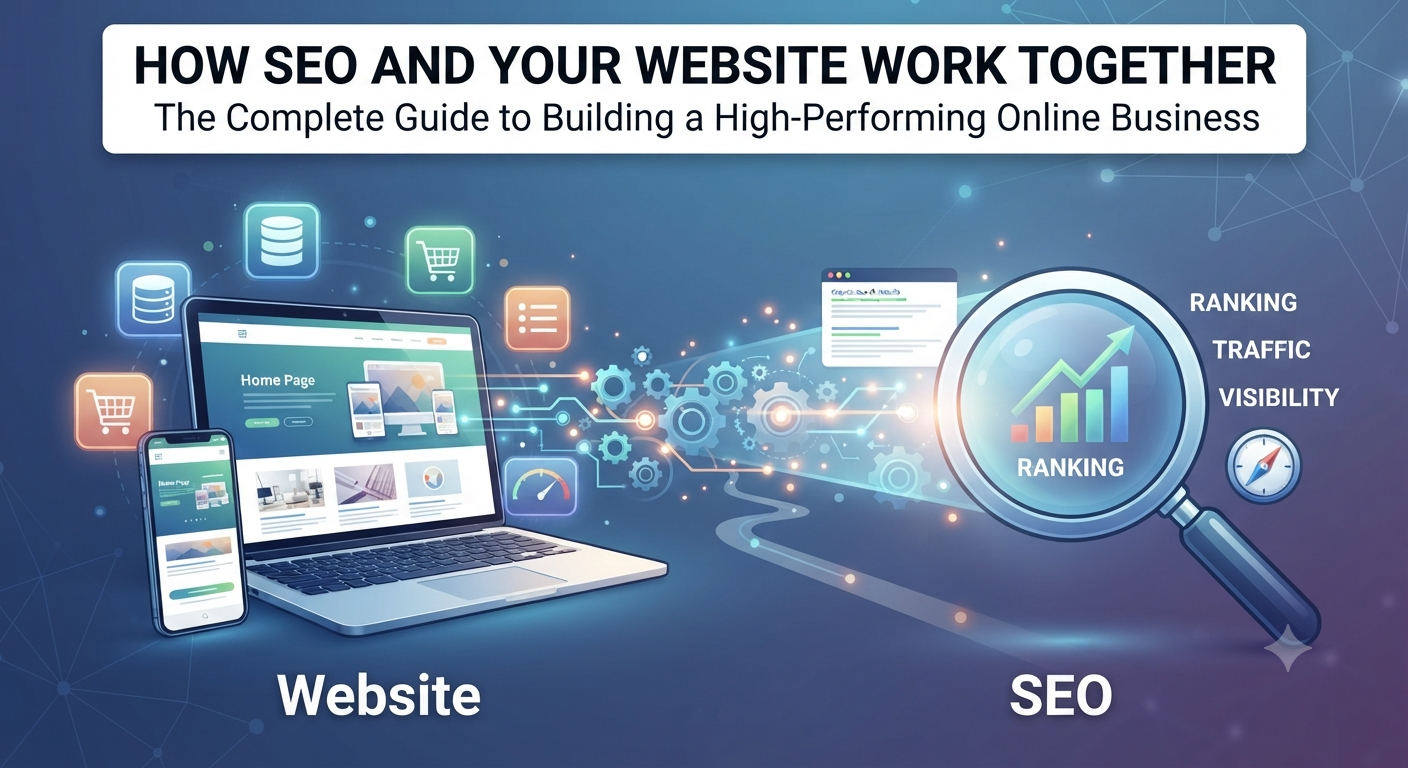
Think of your website as your digital storefront. SEO is what helps people find it. You really need both. If your site looks gorgeous but nobody finds it on Google, it’s invisible. But if your SEO works, bringing people to a slow, messy site, they’ll bounce right out and never come back.
Businesses that keep growing online get this. They know that SEO and website development aren’t separate things. They’re two sides of the same coin. When you build them together, you don’t just get more visitors you get people who trust you and are more likely to buy.
How SEO and Your Website Really Connect
A lot of people think you just finish building your website, then “do SEO.” Not true. SEO starts as soon as you sketch out your site on paper.
Everything you put on your site matters every page, every image, every button, every line of code. Google pays attention, and so do your potential customers.
Google’s goal is simple: deliver the best answers to users. That means it wants to send people to sites that load fast, feel secure, answer questions, and just plain work.
That’s why modern SEO is way more than cramming in keywords. It’s a blend of technical tweaks, solid content, smooth user experience, and smart site structure.
Your Website: The Real Backbone of SEO
If your website’s a mess, even the best SEO tactics won’t get results for long. It all starts with a solid foundation.
1. Speed Matters
Nobody likes waiting around for a slow website. Research shows even small delays make visitors bail.
Google watches load times. If your site is fast, people stick around longer and explore more. That’s good for your rankings.
Keep things quick by shrinking image sizes, cutting out extra code, turning on caching, and choosing a solid web host.
2. Design for Mobile, Always
More than half of visitors are on their phones. Google now looks at your mobile site before your desktop one.
If people have to pinch, swipe, or fight with clunky phone layouts, they just leave. And guess what Google sees that.
When your site is responsive, everyone gets the same smooth experience, no matter the device.
3. Good Content Gets You Noticed
Google doesn’t show pages that don’t help anyone.
So, every page whether it’s explaining your service, selling a product, answering questions, or breaking down a concept should be genuinely helpful and clear.
Solid writing naturally uses the right keywords. It shows you know your stuff and keeps people reading. That’s what search engines pay attention to.
Forget about writing for robots. Write for real people with real questions.
4. Site Structure Makes Everything Easier
Think of your website like a well-organized library. If the books are scattered everywhere, nobody finds what they’re looking for.
Same goes for Google. A clear menu, smart page levels, simple URLs, breadcrumbs, and links between your pages help both people and search engines navigate your site.
5. Technical SEO: The Behind-the-Scenes Hero
Great websites rely on technical SEO you barely notice. This covers:
- Clean, organized code
- XML sitemaps
- Robots.txt files
- Secure HTTPS connections
- Canonical tags (to avoid duplicate content)
- Schema markup (for better search results)
- Fast Core Web Vitals
- Proper redirects
- Fixing crawl errors
These are the nuts and bolts that help Google “read” and properly rank your site.
How SEO Delivers Customers to Your Website
Even the prettiest site won’t make money if no one shows up.
SEO is how you get found. It helps your pages pop up in search results when people hunt for products, services, or answers you provide.
Instead of waving flashy ads in their faces, SEO puts you in front of folks who are already looking for what you do.
That’s about as close as you get to digital marketing magic.
SEO and Website Design: Where the Customer Journey Happens
Drawing people to your site is just step one.
The real trick? Turning those visitors into actual customers.
A typical buyer’s journey looks like this:
- Someone searches on Google.
- SEO gets your website in front of them.
- The title and description catch their eye, they click.
- Your site loads in a snap.
- The design feels professional and welcoming.
- The content gives them what they came for.
- Navigation is a breeze, so they keep exploring.
- Trust signals reviews, testimonials, badges, security help them relax.
- A clear call-to-action nudges them to buy or get in touch.
Every single step blends SEO and good web design. You can’t have one without the other.
What Happens When You Ignore One Side
Lots of businesses pour money into flashy websites and forget SEO. Others obsess over search rankings but give zero thought to user experience.
Either way, results fall flat.
A great-looking site with no traffic? No sales.
Lots of visitors landing on a clunky site? They leave fast, and you lose business.
To win, you need both: people coming in, and a website ready to serve them.
Big Wins: Why Doing Both Pays Off
When you get your SEO and website performance working in sync, the long-term benefits stack up:
- You climb Google’s ranks.
- More organic visitors land on your pages.
- People spend more time on your site.
- Fewer folks click away.
- Trust goes up.
- You draw in better leads.
- Conversion rates rise.
- You spend less on ads.
- Your marketing dollars go further.
- Your business grows steadily.
Best of all, these gains keep building over time, even if you stop running paid campaigns.
Closing Thoughts
Don’t treat SEO and your website like separate projects. They’re part of the same game plan.
SEO brings the right crowd to your site. A great website turns them into customers. Together, they build a brand people trust, and they keep delivering results long after launch day.
If you want to rank higher, get more engaged visitors, and grow your business for real, you don’t have to pick between SEO and web design. Just make sure they work hand in hand from the start.